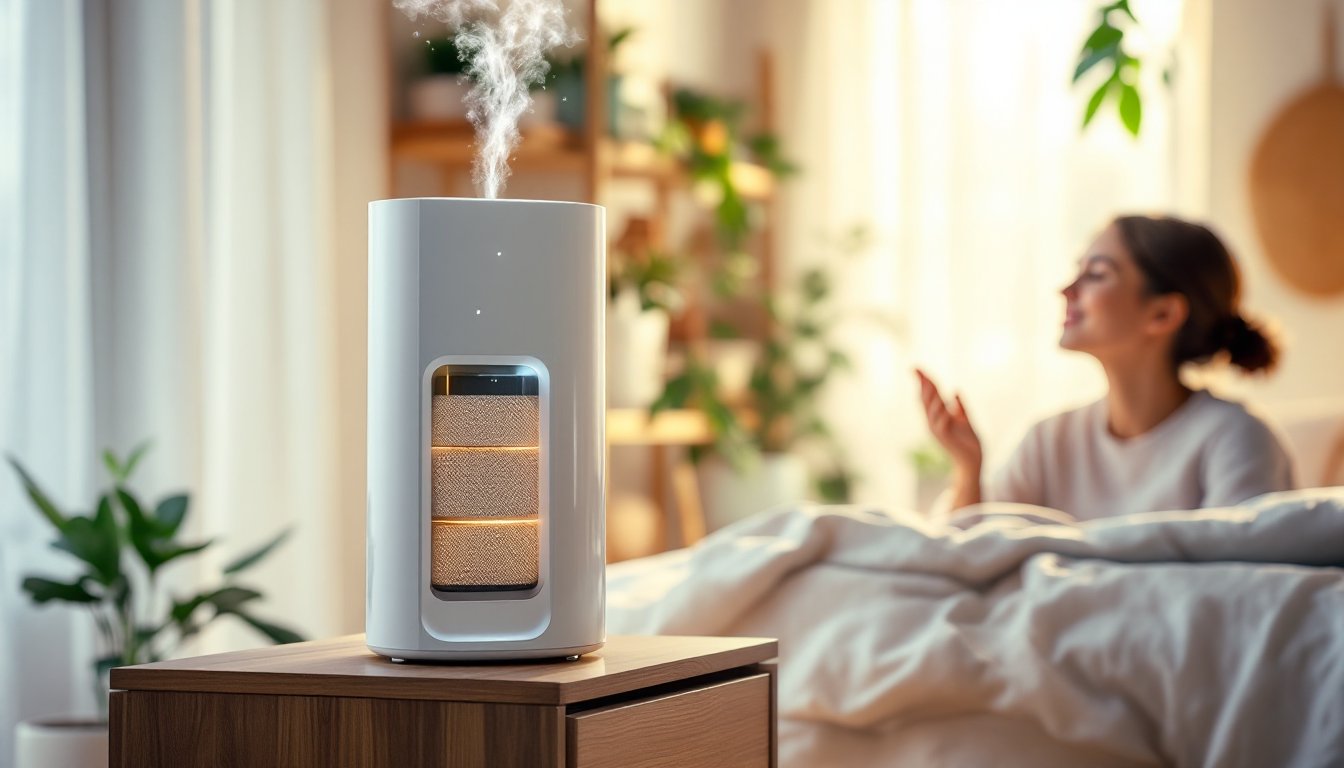
If you’re dealing with allergies, asthma, or just want cleaner air in your home, a medical grade air purifier can make a real difference. Unlike standard purifiers that catch dust and pet hair, medical grade units are designed to remove allergens, bacteria, viruses, and fine particulate matter down to microscopic levels. But with so many options flooding the market, it’s easy to get lost in marketing hype. This guide breaks down what actually matters when choosing a medical grade air purifier, what makes one truly medical grade, which filtration systems work best, and how to size and maintain one for your space.
Table of Contents
ToggleKey Takeaways
- A medical grade air purifier must meet True HEPA certification standards and capture at least 99.97% of particles 0.3 micrometers or larger—far smaller than dust mites or pet hair.
- The best medical grade air purifiers combine HEPA filters with activated carbon and optional UV-C technology for complete removal of particles, odors, and volatile organic compounds.
- Properly size your purifier using Clean Air Delivery Rate (CADR) calculations to ensure it cycles room air 4-5 times per hour for effective purification.
- Strategic placement away from walls and corners, combined with regular monthly filter checks and replacement every 6-12 months, is essential for maintaining medical grade air purifier performance.
- Start with a portable medical grade air purifier in your bedroom or main living area rather than investing in expensive whole-home systems you may neglect over time.
What Makes an Air Purifier Medical Grade
The term “medical grade” gets thrown around a lot, but it has specific meaning in the air quality world. A medical grade air purifier meets rigorous standards set by organizations like HEPA (High-Efficiency Particulate Air) certification bodies and often adheres to standards used in hospitals, cleanrooms, and healthcare facilities.
True medical grade units must capture at least 99.97% of particles 0.3 micrometers or larger from the air passing through the filter. That’s the official HEPA standard. To put that in perspective, dust mites are about 0.3 micrometers, right at that threshold, while human hair is roughly 75 micrometers. So a medical grade purifier catches what your eyes can’t see.
The key difference between a standard air purifier and a medical grade one is filtration efficiency and multi-stage design. Medical grade models typically use a pre-filter, HEPA filter, and activated carbon layer working together. Standard purifiers often skip steps or use lower-efficiency filters to cut costs. Look for units that explicitly state they meet HEPA or True HEPA standards on the product label, not just “HEPA-type” (which is weaker) or “HEPA-like” (which means nothing officially).
If someone in your household has respiratory issues or severe allergies, medical grade filtration is worth the investment. For general air freshening, a standard purifier might suffice. Be honest about your needs before shopping.
Key Filtration Technologies to Look For
Not all medical grade air purifiers work the same way. Understanding the core filtration layers helps you choose the right one for your home.
HEPA and True HEPA Filters
HEPA filters are the backbone of medical grade purification. A True HEPA filter (certified to the official standard) captures particles as small as 0.3 micrometers with that 99.97% efficiency rating. Some units use H13 or H14 grade HEPA filters, which are even more efficient, catching 99.95% and 99.995% respectively, but come at a higher cost and require stronger motors to pull air through the denser medium.
When shopping, check the product specs for the exact HEPA grade and confirm the filter size and replacement cost. A smaller HEPA filter is cheaper to replace but may clog faster, forcing more frequent changes. Larger filters last longer but cost more upfront. Factor replacement cost into your decision, some purifiers need new filters every 6-12 months, depending on air quality and usage.
HEPA filters trap particles but don’t absorb odors or chemical fumes. That’s where the next layer comes in.
Activated Carbon and UV Systems
Activated carbon filters are specially treated to have a porous structure that absorbs gases, odors, and volatile organic compounds (VOCs) from paint, cleaners, and off-gassing from furniture. If you live near traffic, cook a lot, or have pets, an activated carbon layer is nearly essential. Medical grade purifiers usually combine HEPA with activated carbon for more complete air cleaning.
Some units also include UV-C light technology, which uses ultraviolet radiation to neutralize bacteria and viruses as air passes through the chamber. UV is an add-on, not a replacement for HEPA, the filter still does the heavy lifting of capturing particles. UV can be helpful in high-infection situations or for immunocompromised households, but it’s not critical for most homes. Note that UV lamps degrade over time and need replacement every 12-24 months.
Recent reviews from top air purifier ratings show that models combining HEPA, activated carbon, and optional UV tend to outperform single-stage systems, especially for allergy and asthma relief.
Choosing the Right Size for Your Home
Buying a medical grade purifier that’s too small wastes money because it can’t clean the air effectively. Buying one that’s too large also wastes energy and money on overkill. The right size depends on your room’s square footage and the unit’s Clean Air Delivery Rate (CADR).
CADR measures cubic feet per minute (CFM) of filtered air the purifier produces. Most manufacturers recommend models that cycle all the air in a room 4-5 times per hour for effective purification. To calculate, multiply your room’s square footage by the ceiling height (usually 8-10 feet), then multiply by 4 or 5, then divide by 60 to get the CFM needed.
Example: A bedroom of 200 square feet with 9-foot ceilings:
- 200 × 9 = 1,800 cubic feet
- 1,800 × 4.5 (middle range) = 8,100
- 8,100 ÷ 60 = 135 CFM needed
Look for a purifier rated for 135 CFM or higher for that room. Don’t oversimplify by just guessing based on room size, CADR ratings are printed on product boxes and spec sheets.
For whole-home systems, some models can handle 2,000+ square feet, but they’re expensive and require professional installation. For most DIYers, a portable unit in your bedroom and living room covers 80% of daily use. You spend roughly one-third of your life sleeping, so prioritize the bedroom first if budget is tight.
Also consider noise. Purifiers that cycle air 5 times per hour can be noisy on high settings. Check decibel ratings: anything above 60 dB will sound like background chatter. Many good units operate below 55 dB on medium, making them suitable for bedrooms and offices.
Installation and Maintenance Tips
Medical grade air purifiers don’t require complex installation, most plug in and run. But placement and upkeep matter hugely for performance.
Placement is critical. Position the unit centrally in the room, away from corners, where air can circulate freely. Avoid placing it directly against walls or in cabinets: the purifier needs clear intake and exhaust space. If your unit has intake vents on multiple sides, position it so nothing blocks them. In a bedroom, a nightstand or shelf works well. In a living area, a corner near a seating zone lets you breathe cleaner air where you spend time.
Don’t expect a single purifier to clean an entire open-plan home effectively. Air purifiers work best in enclosed or semi-enclosed spaces. If you have a two-story house, put units on both levels.
Filter replacement is non-negotiable. Check filters monthly, hold one up to a light source. If it looks dark or clogged, change it sooner than the manufacturer recommends. Running a clogged filter reduces efficiency and strains the motor. Most HEPA filters need replacement every 6-12 months: activated carbon every 3-6 months, depending on air quality and purifier usage hours per day.
Keep spare filters on hand. Some medical grade purifiers use proprietary filters that take weeks to order if you wait until one dies. Set a phone reminder for filter changes, a forgotten maintenance task is the #1 reason air purifiers underperform.
Clean the exterior and intake vents monthly with a soft, dry cloth. Don’t use water or cleaners on the unit itself unless the manual says it’s safe. Depending on your environment, filters perform best with regular maintenance. Running the purifier 8-16 hours daily in an average home keeps air quality high without wearing filters prematurely.
Conclusion
A medical grade air purifier is a practical investment for homes with allergies, asthma, or poor air quality. Focus on True HEPA certification, adequate CADR for your room size, and a filter replacement schedule you can actually maintain. Start with one unit in your bedroom or main living area, place it correctly, and swap filters on time. That consistency beats buying an expensive whole-home system and neglecting it. Your air quality will improve measurably within days.