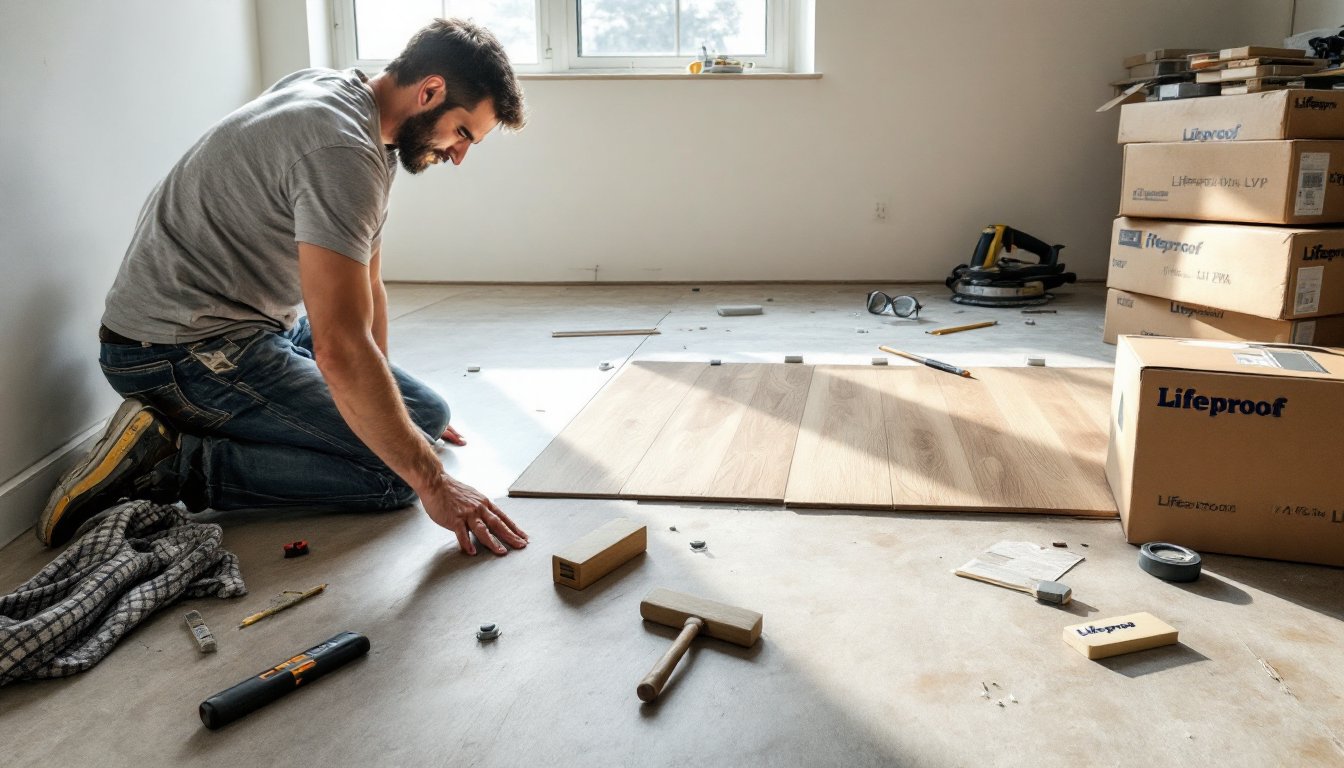
Lifeproof flooring has become a game-changer for homeowners who want durable, waterproof floors without the premium price tag of traditional hardwood. Whether you’re refreshing a kitchen, bathroom, laundry room, or basement, this luxury vinyl plank (LVP) option delivers the look of natural wood while standing up to moisture, pets, and heavy foot traffic. The best part? You can install it yourself over a weekend with basic tools and patience. This guide walks you through everything from prep to finishing touches, so you’ll know exactly what to expect before you tear up that old flooring.
Table of Contents
ToggleKey Takeaways
- Lifeproof flooring installation is a weekend DIY project that requires only basic tools and no adhesives, thanks to its click-and-lock system that eliminates the need for glue or nails.
- Proper subfloor preparation—checking moisture levels, cleaning thoroughly, and leveling gaps larger than 1/4 inch—is critical to avoid premature failure and visible defects in your Lifeproof floors.
- Staggered joint layout, where seams offset like brickwork between rows, prevents long sight lines and distributes stress evenly across the flooring surface.
- Lifeproof’s waterproof, rigid core makes it ideal for moisture-prone areas like kitchens, bathrooms, and basements, while remaining significantly cheaper than authentic hardwood flooring.
- Maintaining Lifeproof flooring is simple: vacuum weekly, damp-mop monthly with vinyl-specific cleaner, and immediately wipe spills to prevent water seepage into seams.
- Individual Lifeproof planks are replaceable by simply unclicking and snapping new ones into place, making repairs straightforward and cost-effective.
What Is Lifeproof Flooring and Why Choose It
Lifeproof is a brand of luxury vinyl plank (LVP) flooring made by the Karndean company, designed specifically for moisture-prone spaces. Unlike laminate, which swells and warps when wet, Lifeproof planks are rigid and fully waterproof, they won’t cup, buckle, or delaminate if water sits on them for days.
The planks measure roughly 6 inches wide by 36 inches long (dimensions vary by collection), with a 4mm to 5mm thick core that provides stability and comfort underfoot. The top layer mimics real wood grain or stone finishes so closely that visitors often can’t tell it’s vinyl. Installation is straightforward: planks click together using a click-and-lock system, meaning no glue or nails are required.
Homeowners choose Lifeproof for several reasons. It handles spills, pet accidents, and splashing water better than real wood or laminate. It’s also quieter underfoot than sheet vinyl, warmer than tile, and significantly cheaper than authentic hardwood. Maintenance is a breeze, a simple vacuum and damp mop keep it pristine. Unlike traditional vinyl, Lifeproof doesn’t require a perfect subfloor in every spot: minor dips and bumps are absorbed by the rigid core, though you’ll still need a relatively clean, flat base.
Tools and Materials You’ll Need
Before you crack open the first box, gather your tools and materials. Having everything on hand prevents mid-project trips to the store.
Materials:
• Lifeproof planks (purchase 10% extra for cuts and mistakes)
• Underlayment (vapor barrier: many Lifeproof products come with pre-attached underlayment)
• Spacers (plastic wedges, typically 1/4 inch, to maintain expansion gaps)
• Wood filler or vinyl patching compound (for subfloor repairs)
• Trowel (if replacing or leveling subfloor)
• Clean cloths or sponges (for cleanup and final wiping)
Tools:
• Circular saw or miter saw (miter saw gives cleaner crosscuts: circular saw is portable)
• Jigsaw (for cutting around doorways and obstacles)
• Measuring tape (at least 25 feet)
• Spacer blocks (or homemade spacers from scrap wood)
• Tapping block (a scrap of plank and rubber mallet help click boards together without damage)
• Pencil or chalk (for layout marks)
• Safety gear: eye protection, dust mask, and hearing protection when cutting
If your subfloor needs patching or leveling, add a self-leveling compound and a wide putty knife. A moisture meter ($20–$50) is worth buying if you’ve had water issues: it confirms your subfloor is dry before installation begins.
Preparing Your Subfloor for Installation
Subfloor prep is where most DIY flooring projects succeed or fail. Lifeproof tolerates minor imperfections better than wood or laminate, but it still demands a clean, dry, and relatively level base.
Check for moisture first. Use a moisture meter on both the concrete slab (if applicable) or the wooden subfloor beneath. Moisture readings above 12% on wood or 2.5 on concrete signal a problem: don’t install over a damp subfloor. Address leaks or moisture sources before proceeding.
Clean the subfloor thoroughly. Sweep and vacuum away all dust, debris, and old adhesive. Any grit trapped under planks causes telegraphing, visible ridges and bumps that mirror the debris below. Use a concrete degrease or hardwood floor cleaner depending on your subfloor type. Let everything dry completely.
Check levelness. Place a 4-foot straight edge across the floor. Gaps larger than 1/4 inch under the straightedge should be leveled. Pour self-leveling concrete compound over low spots on concrete slabs, or sand down high spots on wooden subfloors. If your subfloor has significant dips (more than 1/2 inch), leveling is essential, Lifeproof’s rigid core won’t bridge large gaps without flexing, which leads to premature failure.
Repair the subfloor. Fill holes, gaps, or popped nails with appropriate filler (wood filler for wood, vinyl patching compound for concrete). Sand smooth after drying. Let the floor breathe for at least 24 hours before laying underlayment.
Step-by-Step Installation Process
Laying Out Your First Rows
Layout determines how your finished floor looks. A poorly planned start leaves you with slivers and uneven patterns along the far wall.
Measure your room width. Find the width perpendicular to the wall where you’ll start (usually the entry). Divide that width by the plank width (typically 6 inches). If the math gives you a remainder smaller than 1 inch, rip (cut lengthwise) your first-row planks so the last row ends with a plank wider than 2 inches. Narrow slivers look awkward and are fragile.
Snap a chalk line. Run a chalk line parallel to your starting wall, accounting for your adjusted first-row width. This guides your first row and keeps everything square. Use spacers (1/4-inch plastic wedges) along the wall to maintain expansion clearance: Lifeproof needs room to shift slightly with humidity changes, and cramming it tight against a wall causes buckling.
Dry-lay your first two rows. Click planks together without permanent commitment. Check that joints stagger (offset the seams between rows like brickwork). Staggered joints prevent long sight lines and distribute stress more evenly. Remove planks once you’re satisfied with the layout.
Installing Planks and Checking for Gaps
Now you’re ready to lock in the real installation. Recent guides on vinyl plank flooring confirm that this click-and-lock method is the most user-friendly approach for DIYers.
Install the first row. Start at one end of your chalk line. Position the first plank, leaving 1/4-inch spacers against the wall. Click the second plank to the first along the long edge (the boards interlock at roughly a 20-degree angle, then drop flat). Use a tapping block, a scrap of plank laid on top with a rubber mallet, to avoid damaging the locking mechanism. Continue across the room.
Check for gaps as you go. Lifeproof planks should sit flush: visible gaps mean the locking mechanism isn’t fully engaged. Tap gently with the mallet and block until the plank settles. Never force it, forcing can break the locking edge.
Cut the last plank in each row. Measure from the last installed plank to the spacer at the wall, subtract the spacer thickness, and mark your cut. Use a circular saw or miter saw (miter saw provides cleaner cuts with less chipping). Always wear eye protection and a dust mask when cutting vinyl: fine particles are irritating.
Offset subsequent rows by half a plank. After completing the first row, begin the second row with a half-plank (cut a plank in half lengthwise for cleaner aesthetics and better structural distribution). Click the short edge of the second-row plank into the long edge of the first-row plank. Continue staggering throughout the floor. Step-by-step installation processes recommend this staggering pattern to prevent stress concentrations.
Handle obstacles carefully. For doorways, trace the opening onto a plank, then use a jigsaw to cut the shape. For door frames, you can notch the plank to fit around the molding or slice planks to fit under the frame (the latter looks cleaner and is easier).
Leave spacers in place while installing. Don’t remove the 1/4-inch spacers at the walls until the entire floor is laid and clicked together. They prevent the planks from shifting into the walls as you work.
Work in stages. Installing an entire room solo is tiring. Break the project into sections (each wall or quadrant). Take breaks, stay hydrated, and avoid rushing, mistakes multiply when you’re tired.
Finishing Touches and Maintenance Tips
Once all planks are installed and clicked together, you’re nearly done. Final touches seal the look and protect your investment.
Remove spacers and install transitions. After the floor is complete, carefully pull out all spacers. The expansion gap you’ve left is now concealed by baseboards or shoe molding. If you’re transitioning to another flooring type (tile, concrete, or a different floor height), install appropriate transition strips. T-molding works for same-height transitions: reducers work when the Lifeproof floor is slightly higher.
Re-attach baseboards and molding. Many DIYers remove baseboards before flooring installation. Once the floor is laid, caulk the gap between baseboard and plank with paintable caulk (don’t use silicone: it stains vinyl). Nail or screw baseboards back in place. Caulking creates a finished look and prevents dust from settling into the expansion gap.
Clean thoroughly. Sweep and vacuum the entire floor to remove sawdust and debris. Use a damp cloth with vinyl floor cleaner (avoid excessive water) to wipe down the surface. A dry microfiber mop brings out shine without streaking.
Maintenance moving forward. Lifeproof requires minimal care. Vacuum weekly to prevent grit buildup. Damp-mop monthly with vinyl-specific cleaner, never soak the floor, and dry it promptly. Wipe spills immediately: while Lifeproof is waterproof, standing water can seep into seams over time. Use felt pads under furniture legs to prevent scratching, and avoid dragging heavy items across the surface. For stubborn scuffs or marks, a magic eraser (melamine foam) usually does the trick. Costs for maintenance supplies are negligible: home improvement resources can guide you on specific cleaning products if needed.
Know what you’ve got. Take a photo of the plank type and color for future reference. If you ever need to replace a damaged plank, you’ll know exactly what to order. Lifeproof planks are individually clickable, so replacing one or two is straightforward, unclick the damaged plank and snap a new one in place.