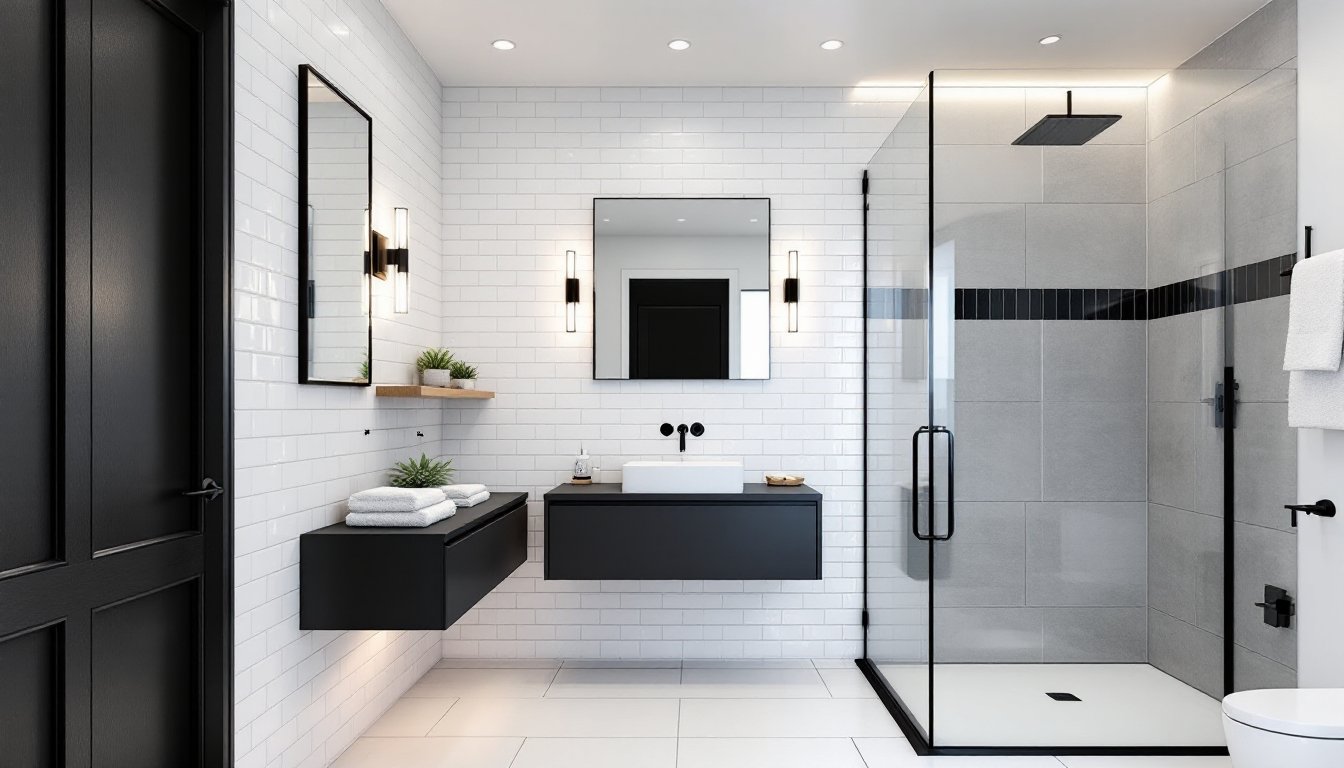
Black and white is the closest thing to a foolproof design formula for bathrooms, especially when square footage is at a premium. The contrast creates visual interest without overwhelming a tight space, and the palette stays relevant across decades of design trends. A modern small black and white bathroom doesn’t need to feel cold or clinical, thoughtful material choices, proper lighting, and intentional proportions of each color can make the space feel sophisticated and inviting. This guide walks you through the design principles, material selections, and layout strategies that actually work in compact bathrooms.
Table of Contents
ToggleKey Takeaways
- A modern small black and white bathroom uses a 60–70% white base with 20–30% black accents and 10% warm-toned details to achieve visual balance without overwhelming tight spaces.
- Choose one statement surface (like a bold tile pattern or dark shower surround) and keep the rest of the design quiet to prevent visual clutter and maintain sophisticated simplicity.
- Wall-mounted vanities, large-format tiles, and vertical emphasis make small bathrooms feel taller and more spacious while improving functionality and ease of cleaning.
- Layered lighting with sconces flanking the mirror and warm-white (2700K) LED bulbs transforms a black and white bathroom from cold to inviting and sophisticated.
- Material consistency matters: match hardware finishes (all matte black or all brushed nickel) and limit accessories to three to five curated items with clean lines to avoid visual fragmentation.
- Proper tile selection—matte porcelain with a COF rating of 0.50 or higher for slip resistance—combined with warm wood accents or natural stone prevents the space from feeling sterile or clinical.
Why Black and White Works for Small Bathrooms
Black and white bathrooms deliver contrast without adding visual clutter. In a small footprint, every surface reads quickly, light colors reflect available light and make walls feel less confining, while black anchors the eye and prevents the space from feeling sterile. The two-tone approach also masks imperfections better than a single light color: grout lines and minor tile variations disappear into the grain when you’re not staring at a monochrome field.
Modern design embraces bold color combinations because they feel intentional. A black accent wall or dark tile stripe isn’t apologetic or timid, it’s a deliberate choice that makes the bathroom feel designed, not defaulted. For homeowners nervous about committing to dark tones, the split is easy to shift: 70% white base, 30% black accents in tile, fixtures, or trim works as a starting rule. The beauty is flexibility: if black feels too dominant after a few months, swapping out accessories and lighting adjusts the mood without renovation.
Stylish small bathroom designs demonstrate that the palette works across styles, contemporary, mid-century, minimalist, and even transitional.
Essential Design Principles for Modern Small Bathrooms
Modern design in a small bathroom hinges on restraint and proportion. Avoid patterns that compete, if you’re using a black-and-white tile pattern on the floor, keep walls simple. If walls carry visual weight (like subway tile with dark grout), dial down the accessory count.
Vertical emphasis makes small spaces feel taller. Run tile or paint toward the ceiling rather than stopping at the typical vanity height. Unbroken sight lines keep a bathroom from feeling cramped: frame fixtures (toilet, vanity, shower) so nothing juts into the middle of the room.
Material hierarchy matters. Choose one statement surface, perhaps a dramatic black tile shower surround or a monochrome geometric floor pattern, and keep everything else quiet. Finishes should be either matte (which reads as refined in modern design) or polished (chrome, brushed nickel), not a mix of both.
Color Balance and Contrast Strategies
Start by identifying your dominant color. Most successful small modern bathrooms run 60–70% white or light neutral, 20–30% black, and 10% warm-toned accents (brushed brass, warm wood shelf, or warm-white grout). This ratio prevents the room from reading as a chess board.
Black should anchor low and structural: floor tile, vanity base, tile stripe at waist height, or shower walls. White above grounds the eye and opens the room upward. If your walls are white subway tile, a black grout line reads cleaner and more modern than white grout, which tends to disappear and look unfinished.
Warm accents prevent cold. Even in modern black-and-white bathrooms, a wooden shelf, warm brass towel rack, or natural stone accent prevents the space from feeling like a sterile showroom. A single potted plant or warm-toned bath mat reinforces this without adding clutter.
Fixtures, Materials, and Finishes That Define Modern Style
Modern fixtures have clean geometry and minimal ornamentation. A wall-mounted vanity with a floating design makes the small room feel less weighted and easier to clean around. Look for vanities 24–36 inches wide with integrated or slim under-mount sinks: vessel sinks and pedestal bases eat floor space and complicate plumbing updates.
Faucet choice matters visually. Matte black or brushed nickel finishes align with modern aesthetics: shiny chrome and polished brass feel dated in minimalist contexts. A single-lever or sleek spout design reads cleaner than traditional double handles. Ensure your vanity back is finished or mounted to wall studs, drywall alone won’t support the weight long-term.
Tile and stone anchor the space. Subway tile (3″ × 6″ nominal dimensions) with contrasting grout is the modern baseline for shower surrounds and walls. Pair with a solid-color or geometric floor tile in black, white, or a soft gray. Large-format tiles (12″ × 24″ or 24″ × 24″) feel more contemporary in a small footprint because fewer grout lines create visual calm. Matte finishes read as higher-end: glossy subway tile skews dated.
For flooring, porcelain tile rated for wet areas is standard. Slip-resistance matters, aim for a COF (coefficient of friction) rating of 0.50 or higher. Check local building code requirements: many jurisdictions require a floor rated for wet conditions in bathrooms near showers. Natural stone (marble, slate) looks beautiful but is harder to maintain: porcelain that mimics stone gives the look with easier care.
A modern black and white bathroom benefits from curated home product guides and design inspiration when selecting hardware and accessories that fit the aesthetic.
Space-Saving Layout Ideas for Black and White Bathrooms
In a small bathroom, layout determines livability. Position the toilet and vanity so neither juts into the room: a toilet tucked into a corner and a wall-mounted vanity maximize clear floor space. The shower or tub is the fixed element, build the rest around it.
For bathrooms under 50 square feet, a corner shower with a frameless glass enclosure reads lighter than a traditional tub-shower combo. The glass transparency makes the space feel larger than a solid shower door. Alternatively, a curbless (zero-threshold) shower at floor level is easier to access and modern in design, though it requires careful waterproofing and sloped subfloor framing to prevent water ingress, this is a structural job best left to experienced DIYers or pros.
Vanity height is flexible. Standard height is 30–32 inches, but modern design often bumps this to 34–36 inches for a less cramped feel and easier use. Confirm plumbing supply and drain locations before committing to vanity placement. If existing rough-ins don’t align, relocating supply lines is possible but adds cost and requires cutting into studs.
Open shelving above the toilet or vanity works if styled tightly, three rolled towels, a soap dispenser, and a small plant. Too many items visually fragment a small space. A single recessed medicine cabinet above the vanity is less visually intrusive than a large wall-mounted cabinet.
Consider a narrow floating shelf in a contrasting finish (warm wood against white walls, or matte black metal) as a design anchor. Keep it clutter-free: Houzz offers inspiration for small bathroom layouts and design solutions that balance function and form.
Lighting and Accessories to Complete Your Modern Look
Lighting transforms a black and white bathroom from stark to sophisticated. Avoid a single overhead fixture: layer instead. Install sconces flanking the mirror (15–18 inches above eye level) for shadow-free grooming light, and add a recessed or flush-mount fixture in the ceiling for ambient brightness. If your bathroom is under 40 square feet, a 2700K (warm white) LED bulb in at least 60 watts equivalent prevents the space from feeling clinical.
Fluorescent or blue-toned (5000K) light in black and white reads cold and unflattering. Test finishes and materials under your actual light before finalizing purchases, white tile and black grout can flip between clean and cold depending on bulb temperature.
Accessories complete the story without adding chaos. In a small black and white bathroom, select three to five accent items: a modern towel rack (matte black or brushed nickel), a soap dispenser, a small mirror, a waste bin, and perhaps a single shelf or floating storage. Each should have clean lines and limited ornamentation. A single piece of art or a neutral-toned bath mat adds warmth without breaking the palette.
Hardware (drawer pulls, towel bars, toilet paper holder) should match or coordinate, all brushed nickel or all matte black, to avoid visual fragmentation. Matte black hardware is increasingly affordable and reads more contemporary than chrome: a basic chrome towel bar paired with matte black drawer pulls looks unintentional.
Storage is critical in compact bathrooms. A vanity with drawers (not just cabinet doors) keeps items organized and visible. Vertical storage, a tall, slim cabinet in white or black, pulls double duty for appearance and function. Keep the vanity top clear except for a soap pump and small decorative object: open counters make a small space feel less cramped.
Conclusion
A modern small black and white bathroom works because it’s visually quiet and inherently balanced. Success comes from restraint: choose one or two statement surfaces, stick to a 60–30–10 color ratio, and invest in clean-lined fixtures and finishes. Lighting and thoughtful accessory selection elevate the space from minimal to intentional. The result is a bathroom that feels larger, designed, and timeless.