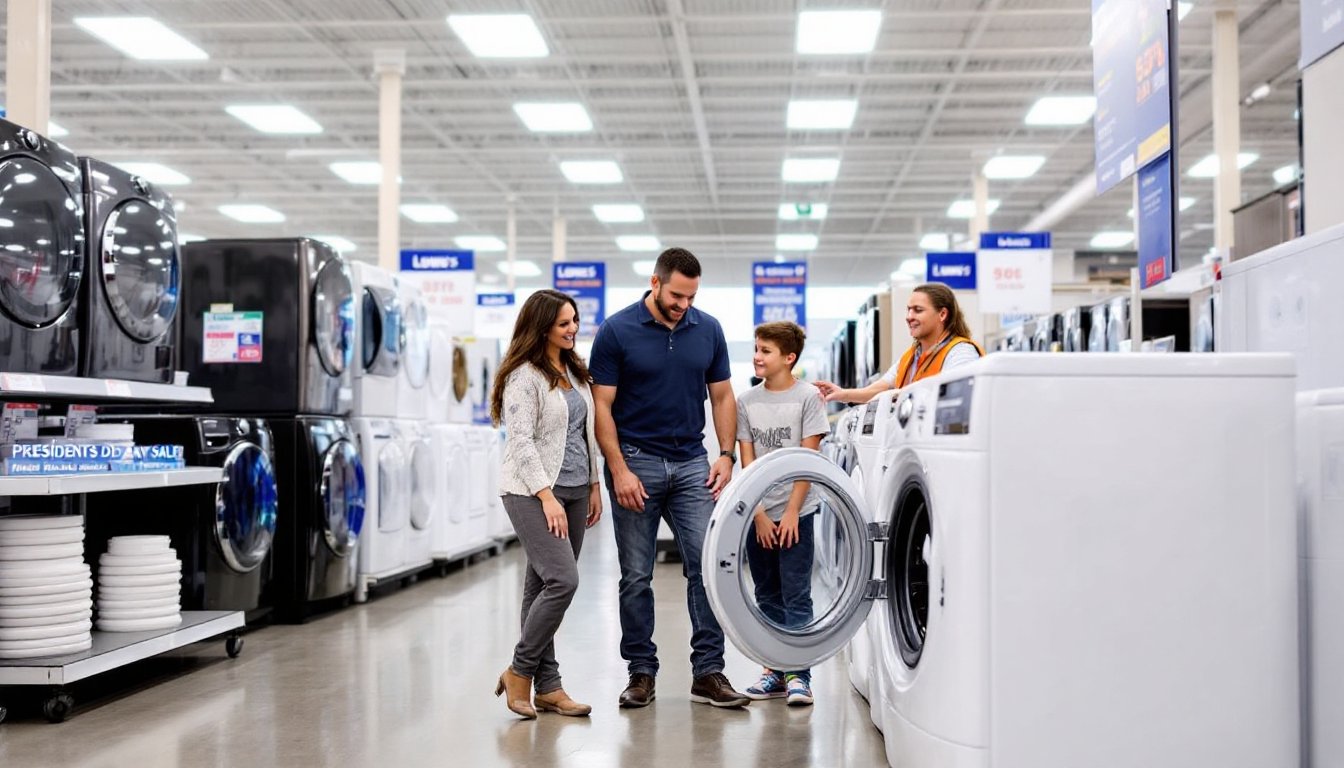
Shopping for a new washer and dryer can feel overwhelming with the options available today. Lowe’s offers a solid range of models across different price points and feature sets, making it easier to find laundry equipment that matches both your home’s layout and your budget. Whether you’re replacing worn-out units or upgrading to something more efficient, understanding the differences between washer and dryer types, and how installation factors into your decision, helps you make a choice you won’t regret. This guide walks you through what Lowe’s has to offer and the key considerations that matter most for your household.
Table of Contents
ToggleKey Takeaways
- Lowe’s washer and dryer selection spans multiple brands and price points, with the added benefit of in-store comparison, delivery, and professional installation services that handle complex hookups and venting.
- Front-load washers use 40% less water and save dryer time and floor space, but cost $600–$1,200 and require more maintenance, while top-load models are budget-friendly ($400–$700) and faster but consume more water.
- Vented dryers are the fastest and most affordable option ($400–$800) if you have exterior wall access, while ventless models like heat pump dryers ($1,200–$1,800) are ideal for condos or when minimizing energy use and humidity is a priority.
- Measure your laundry space, doorways, and ceiling clearance before purchasing—many installation issues stem from units that don’t fit the intended space or have incompatible utility connections.
- Professional installation through Lowe’s ($150–$300 per unit) saves time and prevents costly mistakes with water hookups, ductwork, and electrical connections, and always allow new units to acclimate to room temperature before plugging them in.
Why Choose Lowe’s for Washer and Dryer Shopping
Lowe’s has become a go-to destination for major appliances, and there are solid reasons why homeowners land there first. The chain stocks a wide range of washer and dryer models from trusted brands like LG, Whirlpool, Maytag, and GE, spanning price brackets from budget-conscious to premium. You get the benefit of comparing units side-by-side in-store, reading specifications on the shelf tags, and asking floor staff questions directly, no waiting for an email response.
Beyond selection, Lowe’s offers delivery and installation services for many models, which matters a lot if you’re dealing with hookup complexities, ductwork for venting, or rough flooring that needs shims. You can also check out current promotions: for example, seasonal sales like the Lowe’s Presidents Day Sale 2026: Fridges, Washers, and More often include bundled deals on washer-dryer combos that cut your total cost. The return policy gives you breathing room too, if something doesn’t fit your space after delivery, you have options to swap or return within the window.
Lowe’s also stocks many of the smaller items you’ll need: fill hoses, connector kits, transition pieces, and outlet adapters. Rather than hunting three stores, you can grab everything at once, which saves time and frustration.
Understanding Washer Types and Features
Top-Load vs. Front-Load Washers
This is the first real decision point. Top-load washers are the traditional upright machines where you drop clothes in from above. They’re usually more affordable, faster per cycle, and gentler on delicate fabrics because clothes tumble in water rather than being pressed against a drum. If you have a smaller household or limited space for the footprint, a top-load can be practical.
The trade-off: top-loaders use more water and typically run longer cycles. If water bills are high in your area or you’re aiming for efficiency, they’re not ideal. They also have an agitator down the middle, which can tangle fitted sheets and requires you to be thoughtful about load size.
Front-load washers are the horizontal-drum design that’s become more common in recent years. They use about 40% less water per cycle and spin faster, which means clothes come out drier and dry time in the dryer shortens, a real win if electricity costs matter. Front-loaders are gentler on fabric fibers overall and handle bulky items better. You can stack a dryer on top, which saves floor space in a cramped laundry closet.
The catch: front-loaders cost more upfront, typically $600–$1,200 vs. $400–$700 for a top-load. They’re slower per cycle, take longer to fill, and require attention to mold prevention (you need to clean the seal and leave the door open between washes). Many people find the extra maintenance annoying if they’re not diligent about it.
Lowe’s stocks both types, and the decision really hinges on your priorities: budget and speed point to top-load, while water savings and space efficiency point to front-load. Most mid-range models from both camps include standard cycles like normal, delicate, and heavy-duty, as well as temperature control and spin-speed adjustments.
Choosing the Right Dryer for Your Needs
Vented and Ventless Dryer Options
Vented dryers are the traditional choice and what most homes have. They pull air through the drum, heat it, and exhaust hot, humid air out of your home via a ductwork system, either through a wall or roof. They’re fast (cycles complete in 30–45 minutes), affordable ($400–$800), and energy-efficient. The only requirement is access to a vent path, which is a deal-breaker if you’re in a condo or apartment without an exterior wall near your laundry space.
If you go the vented route, make sure you’re planning for proper ducting. The exhaust hose should be as short and straight as possible, each elbow or bend reduces airflow and forces the dryer to work harder. Flexible foil hose is the cheapest option but prone to kinking: rigid aluminum duct is sturdier and lasts longer. You’ll want to check that your wall or roof opening is accessible and clear of insulation or other obstructions. Some jurisdictions require the vent termination to have a flapper and screen: check your local code or ask at Lowe’s when you’re buying your hose kit.
Ventless dryers come in two flavors: heat pump and condensing. Both capture moisture without venting it outside, making them ideal for condos, apartments, or homes where exterior venting isn’t feasible. Heat pump dryers (around $1,200–$1,800) are more efficient because they recycle heat, which cuts energy use substantially. Condensing dryers ($600–$1,000) condense moisture into a reservoir or drain line: they’re cheaper than heat pump models but run hotter and slightly less efficiently.
The downside to ventless: they run longer cycles (60–90 minutes), require regular cleaning of internal filters to prevent humidity buildup in your home, and need a drain line or reservoir emptying after each load. If you live in a humid climate, condensation inside your laundry room becomes a real issue. Ventless dryers also cost more upfront.
Your choice depends on your venting situation and budget. Vented is the fastest and cheapest if you have exterior wall access. Ventless (especially heat pump) is the answer if you don’t, or if you want to minimize energy use and humidity in your home.
Installation and Setup Considerations
Installation is where many DIYers run into trouble. Before you finalize any purchase at Lowe’s, measure your laundry space carefully. Write down the height, width, and depth of the area where the units will sit. Don’t assume the doorways can accommodate a standard dryer (which can be 26–27 inches wide and 40+ inches tall): measure those too. If you’re stacking a dryer on top of a front-load washer, that stack will be around 72–80 inches tall, verify your ceiling clearance.
Next, identify your utility connections. A washer needs a hot and cold water inlet hookup (standard 3/4-inch threaded connections) and a drain (usually a standpipe into which the drain hose sits, or direct connection to a box). A vented dryer needs a 120V or 240V outlet (check your breaker panel: most electric dryers use 240V, gas dryers use 120V plus a gas line) and ductwork access. A ventless dryer needs only power and a drain line or clear path to a condensate reservoir.
If your hookups are in the wrong place, corroded, or missing altogether, installation becomes a project. Lowe’s can handle professional installation for a fee, which includes delivering, unboxing, positioning, connecting fill hoses, and testing. This typically runs $150–$300 per unit depending on complexity and your location. If you’re doing it yourself, buy the appropriate hose kits (usually $30–$60), acquire Teflon tape for threaded connections to prevent leaks, and consider a hose bib or shut-off valve for easy access when you need to disconnect later.
One often-overlooked detail: let your washer and dryer acclimate to room temperature for a few hours before plugging them in, this prevents condensation inside the units from thermal shock. Don’t skip it, especially if they’ve been in a cold delivery truck or warehouse.
If your space is tight, stackable units or combination washer-dryer machines exist, though they come with trade-offs in capacity and cycle speed. For most homes, side-by-side placement works better if floor space allows. And if your floor is uneven (common in older homes), grab some shims to level the machines front-to-back and side-to-side: an unlevel washer will rock and vibrate excessively.
Conclusion
Picking the right washer and dryer from Lowe’s means balancing your space, budget, water and energy priorities, and installation feasibility. Take time to measure your laundry room, identify your utility connections, and decide whether venting or water efficiency matters most. Lowe’s staff can point you toward models that fit your criteria, and their installation services remove a lot of headache. Whether you’re tackling a minor appliance swap or a full laundry room renovation, planning ahead and not cutting corners on prep, measuring, checking connections, and accounting for installation, ensures your new machines serve you reliably for years. For broader home improvement guidance on budgeting and planning, platforms like HomeAdvisor and Angi offer project cost estimators and contractor insights that round out your planning toolkit.