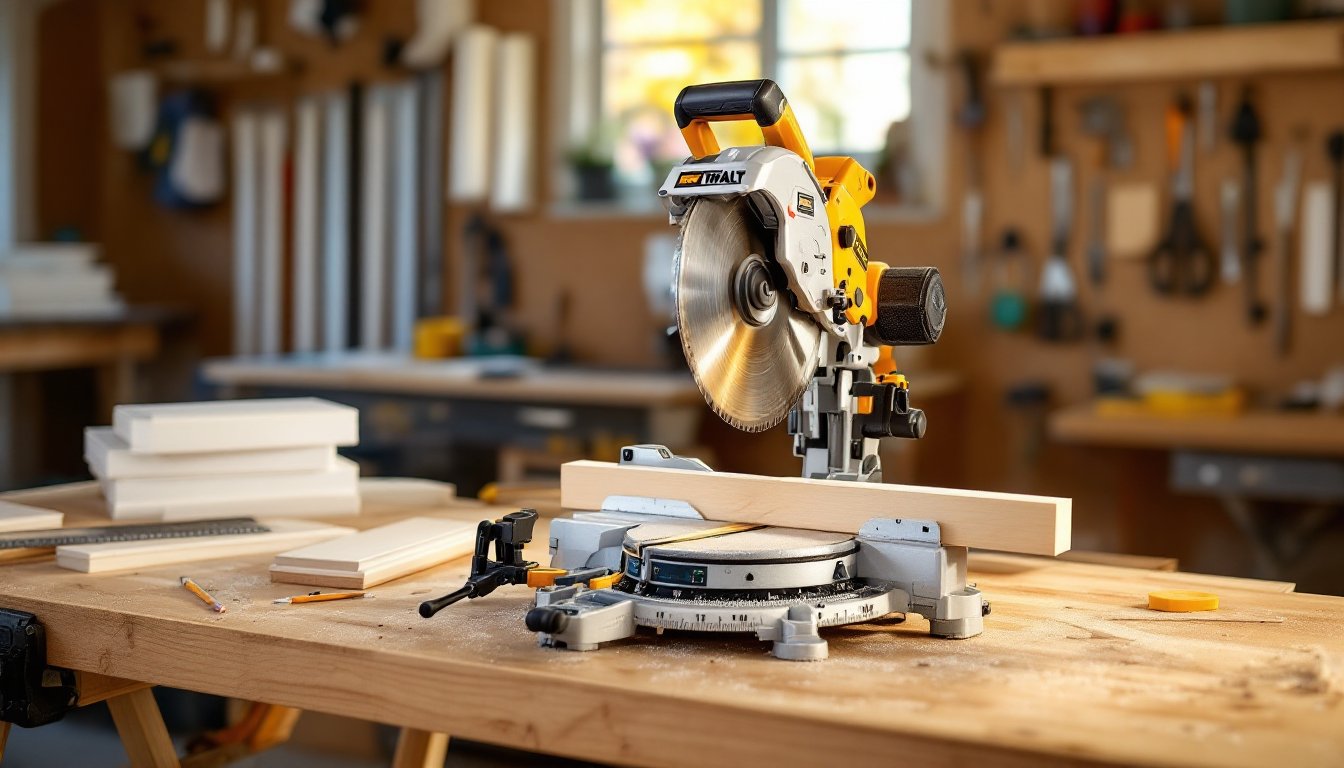
A mini miter saw brings workshop-grade cutting precision to tight spaces and detail-oriented projects. Unlike full-size miter saws that demand dedicated real estate, these compact tools live happily on a garage shelf, apartment balcony, or closet corner, yet still deliver clean crosscuts, angled bevel cuts, and miter joints that look like you actually know what you’re doing. For homeowners tackling trim work, shelving, picture frames, or small furniture builds, a mini miter saw bridges the gap between hand tools and stationary equipment. This guide walks you through what to look for, how to choose the right model, and how to use one safely on projects that matter.
Table of Contents
ToggleKey Takeaways
- A mini miter saw delivers workshop-grade precision in a compact package, making it ideal for homeowners tackling trim, picture frames, shelving, and small furniture projects without sacrificing significant workshop space.
- Choose your mini miter saw based on blade size (4.5 to 8.5 inches), motor power (3 to 5+ amps), and cutting frequency—smaller blades suit trim and softwoods, while 8.5-inch blades handle thicker hardwood and 4×4 lumber.
- Cordless mini miter saws offer portability and flexibility for on-site work, while corded models provide consistent power at lower cost; the choice depends on whether you work in batches or move between multiple locations.
- Respect the blade by always wearing safety goggles, securing your workpiece with clamps, and keeping hands clear of the blade path—these habits prevent most workshop accidents.
- Maintain your mini miter saw by keeping the blade clean and sharp, clearing dust from motor vents weekly, and storing cordless batteries in cool, dry conditions to ensure reliable performance for decades.
What Is a Mini Miter Saw and Why Homeowners Love Them
A mini miter saw is a benchtop power tool with a small rotating blade (typically 4.5 to 8.5 inches) mounted on a pivoting arm. You clamp or hold your workpiece against a fence, pull down the arm, and the blade cuts cleanly through wood, plastic, or light composite materials. It’s smaller, lighter, and cheaper than its full-size cousins (which sport 10 to 12-inch blades), but it does the same essential job: making straight crosscuts, compound angles, and repeatable bevels without fuss.
Homeowners gravitate toward mini miter saws for good reason. They don’t hog shop space, won’t blow the budget, and excel at the stuff that shows, crown molding, baseboards, picture frame corners, deck railings, and cabinet face frames. If you’re hanging shelves or building a bookcase, precision cuts matter: a mini miter saw almost guarantees gaps so tight you’d need a razor blade to slip a piece of paper through them.
Key Advantages for Small Spaces and Tight Projects
Space is the headline win. A full-size sliding miter saw needs a 4-foot-wide bench and eats up real estate you might not have. A mini miter saw fits a 2-foot corner of a workbench, or even clamps to a wall-mounted fold-down table. Apartment dwellers, condo owners, and anyone without a dedicated workshop find that freedom invaluable.
Second, portability matters. Weighing 4 to 7 pounds, most mini miter saws slip into a tool bag or truck bed. If you’re doing a renovation across three rooms or helping a friend with a project, you’re not herniating yourself moving equipment. For finish carpentry, where you’re cutting 20 feet of trim in scattered pieces, portability is gold.
Third, accuracy beats size. A quality mini miter saw holds the same tolerances as a full-size saw for crosscuts and angles. Your cuts depend on blade quality, fence setup, and technique, not blade diameter. That means clean joints, flush trim, and professional-looking results on projects where appearance counts.
Choosing the Right Mini Miter Saw for Your Needs
Not all mini miter saws are created equal. Before you buy, think about the material you’ll mostly cut, how often you’ll use the tool, and what your budget allows.
Motor Power and Blade Size Considerations
Blade diameter ranges from 4.5 to 8.5 inches. A 4.5-inch blade is the smallest and lightest, ideal for trim, plastic molding, and thin stock. It cuts quickly and requires little power, so cordless models with modest batteries work fine. An 8.5-inch blade can handle thicker hardwood and materials up to about 2 inches thick, which opens the door to cutting 4×4 lumber, thick picture-frame stock, and rough lumber for rustic projects.
Motor power correlates with speed and sustained cutting ability. A 3-amp motor is entry-level and sufficient for softwoods, vinyl trim, and aluminum extrusions. A 5-amp motor or higher handles hardwoods, dense composites, and faster cutting without bogging down. Look at the specs, amp ratings tell you endurance. A corded 5-amp saw will always outcut a cordless saw of the same amp rating over long sessions, because cordless models throttle as the battery drains.
Blade speed also matters. Most mini miter saws run at 3,800 to 5,800 RPM (revolutions per minute). Faster isn’t always better, a slower speed with a sharp blade produces cleaner cuts in hardwood than a blunt blade spinning fast. Prioritize blade quality over raw RPM.
Corded vs. Cordless Models: Which Works Best
Corded electric mini miter saws pull consistent power from an outlet. You’ll never run out of juice mid-project, and they’re typically cheaper upfront. The trade-off: you’re tethered to a cord, and you need an outlet nearby. For a basement workbench or garage shop, corded is reliable and economical.
Cordless (battery-powered) models sacrifice a bit of sustained power but gain mobility. A quality 18-volt or 20-volt lithium-ion battery runs most mini miter saws for 1 to 2 hours of active cutting. That’s plenty for trim work. Cordless shines if you’re working on site, cutting trim at the job, slicing shingles on the roof, or assembling furniture in different rooms. Battery cost is the hidden expense: buying extra batteries adds $50 to $150 per unit, but you’ll thank yourself when you’re cutting trim and don’t want to switch saws mid-wall.
Consider your workflow. If you cut in batches, one morning tackling all the living room trim, a corded saw is fine and costs less. If you’re constantly moving between rooms or site to site, cordless flexibility is worth the premium. Hybrid approach: buy a corded saw as your primary and a cordless as a backup for odd jobs.
Essential Safety Tips and Maintenance Practices
A spinning blade is unforgiving. Respect it every time you cut.
Always wear safety goggles, flying chips and dust particles are facts of life, not maybes. Use a dust mask or respirator if you’re cutting MDF or pressure-treated lumber: these materials release fine particles and chemicals that irritate lungs. Hearing protection matters if you’re doing extended cutting sessions: mini miter saws produce 80 to 90 decibels, which is loud enough to damage hearing over time.
Keep hands clear of the blade path. Never reach under or in front of a moving blade, even if the piece seems stuck. Wait for the blade to stop, a quality saw coasts to a stop in 3 to 5 seconds, before touching anything. Use a push stick or clamp for short pieces: don’t hold small offcuts by hand near the blade. Clamp longer boards to the fence so they don’t rotate or slip.
Secure your workpiece every time. A loose board can twist, bind the blade, and launch itself or splinter dangerously. A C-clamp or work holddown takes 10 seconds and prevents 90% of accidents.
Maintenance is straightforward. Keep the blade clean and sharp. A dull blade heats up, burns the wood, and forces you to push harder, all signs it’s time to replace or sharpen it. Check your manufacturer’s recommended blade type (carbide-tipped, number of teeth) and buy the right one: a good blade costs $15 to $40 but transforms cut quality.
Clean dust from the motor vents weekly with a brush or compressed air. Dust clogs cooling fins and shortens motor life. Inspect the fence and base for warping or rust: a bent fence throws off accuracy. On cordless models, follow the battery maker’s charging guidance, don’t overcharge or let batteries fully drain repeatedly, as that degrades lithium cells. Store batteries in a cool, dry place, and charge them a few times a year even if you’re not using the saw, to keep chemistry balanced.
A well-maintained workshop tool lasts decades. Neglected equipment fails mid-project.
Best DIY Projects for Mini Miter Saws
Mini miter saws excel at detail work where precision and portability matter.
Crown molding and baseboards are the classic application. You’re cutting dozens of small pieces at varying angles, and a mini miter saw lets you stand at the saw, measure, cut, and move to the wall without dragging a giant tool. The clean mitered joints at room corners look custom and professional.
Picture frame building showcases what a mini miter saw does best. Cutting 4 pieces of molding stock with matching 45-degree angles at both ends is trivial. Resources like Instructables woodworking guides show frame designs you can build in an afternoon.
Shelving and bookcase projects benefit from accurate crosscutting. If you’re building a rustic floating shelf, a bookcase, or a wall-mounted cabinet, tight cuts mean tight joints, which means your project won’t wobble or look sloppy after a year. A mini miter saw handles the repetitive cuts that frame shelves and rails.
Deck railings and porch trim are candidate jobs if the material is composite or softwood lumber up to 2 inches thick. Hardwood deck boards are denser and slower to cut with a mini saw, so a full-size saw is smarter there. But for spindle cuts, pickets, and cap trim, a cordless mini miter saw on site beats lugging a chop saw back and forth.
Furniture and small woodworking projects like side tables, cutting boards, and jewelry boxes all depend on clean joints. Craftspeople working on a limited bench often prefer a mini miter saw over a hand saw because it’s faster, more accurate, and doesn’t fatigue your arms. If you’re following a furniture building plan from Fix This Build That, you’ll likely need repeatable, precise angle cuts, exactly what a mini miter saw delivers.
Avoid cutting metal extrusion, aluminum siding, or abrasive materials (concrete, stone, brick) without the right blade and research. Standard wood blades dull instantly on metal, and abrasive dust clogs motors. Many mini saws can accommodate specialty blades, but always check the manual and match the blade diameter to the saw’s specifications.