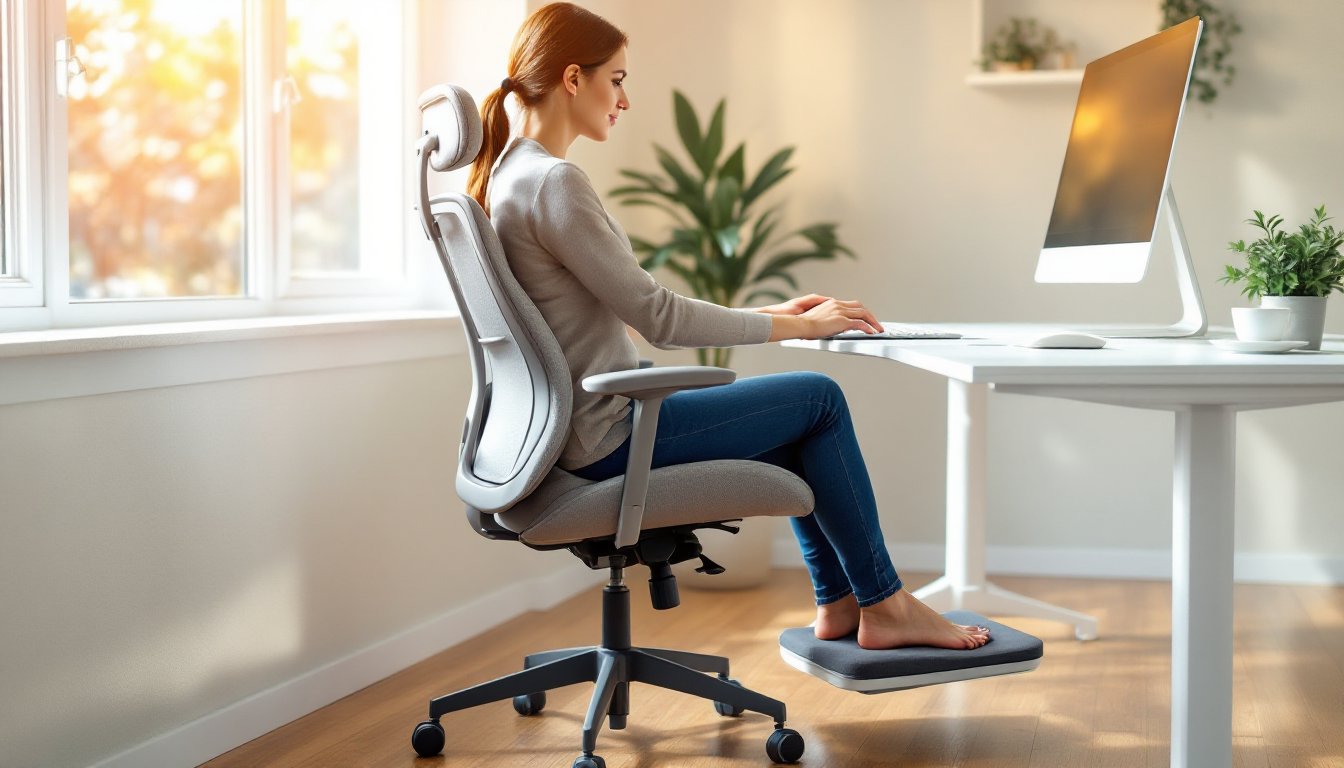
If you spend hours a day sitting in a home office, you’ve probably noticed the ache in your lower back and the tension creeping up your legs by midday. An office chair with a leg rest, also called a footrest or ottoman-style extension, can transform your posture and comfort levels. But not all leg rests are created equal, and picking the wrong one wastes money and leaves you frustrated. This guide walks you through what to look for, why it actually matters for your health, and how to set one up properly in your workspace.
Table of Contents
ToggleKey Takeaways
- An office chair with leg rest elevates your feet while seated to reduce lower back pain, improve circulation, and prevent blood pooling that causes leg swelling throughout your workday.
- Look for adjustable height, quality foam (3+ pounds per cubic foot density), and a stable base when choosing a footrest; mid-market options ($80–$180) deliver better durability than budget models that flatten quickly.
- Proper setup positions your footrest 4–6 inches below seat height with your knees at 90 degrees and the front edge 12–18 inches in front of your chair for comfortable, strain-free positioning.
- An office chair with leg rest pairs best with ergonomic habits like hourly walking breaks, eye-level screen positioning, and 90-degree elbow angles to maximize comfort and productivity throughout your day.
- Regular maintenance—weekly dusting and monthly microfiber cloth wipes for foam tops—keeps your footrest functional and extends its lifespan with minimal effort.
What Is An Office Chair With Leg Rest?
An office chair with leg rest is exactly what it sounds like: a standard task chair paired with a footrest or integrated extension that lets you elevate your legs while seated. Some models come as a matched set, with the footrest designed to match the chair’s height and base. Others are standalone footrests that you position under or alongside any office chair.
These footrests range from simple wooden platforms to adjustable tilt mechanisms with memory foam padding. The key difference between a basic footrest and a proper office chair leg rest is ergonomic alignment, a good one angles to match your sitting position, supporting your feet and calves without requiring you to crane your neck or shift your torso.
You’ll see leg rests marketed in different styles. Some attach directly to the chair’s frame, while others sit independently on the floor. Height-adjustable models let you dial in the exact elevation, while fixed-height options work for standard desk setups. If you’re shopping online or browsing in-store, you’ll notice materials vary from plastic and metal to upholstered foam, so your choice depends on aesthetics and how much give you want underfoot.
Why Leg Rest Matters For Comfort And Health
Sitting for 8+ hours without leg support puts stress on your circulation and lower back. Your feet dangle or rest flat on the floor, which forces your hip flexors to stay slightly contracted. Over months and years, this posture issue contributes to lower back pain, shallow breathing, and even swelling in your lower legs.
A proper leg rest encourages you to shift your position throughout the day. Elevating your legs reduces blood pooling in your feet and ankles, a real problem if you notice puffiness by end-of-day. Your lower back also gets relief because the angle reduces tension on the lumbar spine, especially when combined with a chair that supports your pelvis and lower back properly.
Beyond comfort, ergonomic sitting affects your focus and productivity. When you’re fighting discomfort, part of your brain’s bandwidth goes to fidgeting and adjusting. A leg rest removes one layer of that distraction. Medical research consistently shows that workers in ergonomic setups report fewer sick days and less chronic pain. You don’t need to hire an ergonomics consultant, but investing 15 minutes in chair and footrest alignment pays dividends in how you feel by Friday.
Key Features To Look For When Choosing
Adjustability And Customization Options
The best office chair leg rests let you fine-tune height, angle, and sometimes width to match your body and desk layout. Look for rests with multi-position adjusters, usually a lever or ratchet system that locks at several heights (typically 3–5 positions). This flexibility matters because the right height for you depends on your leg length, how deep your chair sits, and how your desk aligns with your chair.
Some premium models add tilt adjustment, letting you shift the angle from flat to 15–20 degrees to reduce pressure on your lower back. A rocking mechanism adds gentle motion without requiring you to lift your feet, which boosts circulation. If you pair your leg rest with an IKEA Hackers style budget setup or a modular desk, you’ll want something that adapts to imperfect measurements.
Customization also includes surface options. If allergies or sensitivities are a concern, breathable mesh tops reduce heat buildup compared to solid foam. Removable, washable covers (if available) extend the lifespan and keep things hygienic over months of daily use. Width is less talked-about but important: your footrest should be wide enough to support both feet comfortably without one foot hanging off the side.
Material And Durability Considerations
The materials in your leg rest determine how long it lasts and how it feels underfoot. Solid wood or engineered wood (plywood or MDF) is affordable and sturdy if the frame is well-braced. But, these materials can warp with humidity or moisture, so they’re less ideal if your home office is near a bathroom or in a basement. A protective finish helps, but real wood requires occasional conditioning.
Metal frames, usually aluminum or steel, are durable and won’t warp. They’re lighter than wood and offer a modern look. The trade-off is that metal can feel cold and hard against your feet without upholstery. Many hybrid models combine a metal frame with a padded top surface, balancing durability and comfort.
Upholstered or foam tops add comfort but need occasional cleaning. Look for high-density memory foam (3 pounds per cubic foot or higher) if you want it to retain its shape after months of use. Low-density foam compresses quickly and feels flattened within a few months. Covers should be machine-washable or wipeable to handle dust and spills.
For a home office that’ll see heavy daily use, aim for a mid-range option with a metal or reinforced wood frame and a quality foam top. Budget models often cheap out on foam density or skimp on base stability, they feel good for a week, then deflate. Premium office furniture brands (like Herman Miller or Steelcase) make leg rests with industrial-strength materials and warranties, but you’ll pay $300–$600. For most DIYers, a solid mid-market footrest ($80–$180) delivers the best value. Research customer reviews for durability feedback, especially if you plan to use it 40+ hours per week. Modern home design sites like Decoist review contemporary office furniture options that balance form and function.
DIY Setup Tips For Your Home Office
Once you’ve picked a leg rest, proper setup takes 10 minutes and makes a real difference. Start by measuring your current chair’s seat height. A standard office chair sits about 16–20 inches off the floor, but yours might differ. Your leg rest should position your feet roughly 4–6 inches below your seat height, with your knees bent at about 90 degrees when you’re sitting upright.
Arrange the footrest so its front edge sits about 12–18 inches in front of your chair. Too close, and you stub your toes or can’t swing your legs. Too far, and you have to hyperextend to reach it. Mark the spot with a piece of tape so you know where to reposition it if it drifts.
Test the setup for a full workday before declaring it perfect. Discomfort on day one might improve as your muscles adjust, or it might signal a height mismatch. If your lower back still aches, try raising the footrest by 1–2 inches or adjusting your chair back’s recline angle slightly (a 5–10 degree recline opens your hip angle and reduces lumbar strain). If your feet go numb, the elevation is too high or too angled, dial it back.
Pair your leg rest with basic ergonomic habits: take a 5-minute walking break every hour, adjust your screen to eye level, and keep your elbows at 90 degrees when typing. A footrest is one tool in a larger ergonomic toolkit. Modern design resources like Design Milk showcase workspaces that integrate furniture thoughtfully, balancing style with function. If you’re setting up a home office from scratch, invest in a quality monitor arm and keyboard tray alongside your chair and leg rest, the combination yields the best results.
Finally, keep your footrest clean. Dust weekly with a dry cloth, and wipe foam tops with a damp microfiber cloth monthly. This simple maintenance keeps it looking intentional and extends the material’s lifespan.
Conclusion
An office chair with leg rest isn’t a luxury, it’s a practical investment in your comfort and long-term health. The right footrest reduces back pain, improves circulation, and makes your workday feel less physically taxing. Pick one with adjustable height, quality materials, and a stable base, then take 10 minutes to position it correctly. Test it for a week, tweak if needed, and you’ll quickly forget life without one. Your future self, the one sitting comfortably through a full workday, will thank you.